Henan Eyun International Trade Co., Ltd. specializes in the global supply of mining machinery, crushing and screening equipment, cranes, castings, gears, reducers and complete industrial solutions. Backed by trusted manufacturing partners, strict quality control and extensive export experience, we provide reliable products, competitive prices and efficient services to customers in more than 80 countries.
Jaw Crusher vs. Cone Crusher vs. Impact Crusher: Which One Should You Choose?
Not sure whether to choose a jaw crusher, cone crusher, or impact crusher? This comprehensive guide compares their working principles, applications, advantages, disadvantages, operating costs, and ideal project scenarios to help you make the right investment.
Introduction
Choosing the right crusher is one of the most important decisions when designing a crushing plant. The crusher determines not only production capacity but also product quality, operating costs, wear-part consumption, and overall profitability.
Among all crushing equipment, the three most commonly used machines are:
Jaw Crusher
Cone Crusher
Impact Crusher
Although they all perform crushing operations, their working principles, applications, operating costs, and finished product quality are significantly different.
Understanding these differences helps investors avoid unnecessary costs and build a more efficient production line.
1. Understanding the Crushing Process
A complete crushing process usually consists of three stages:
Primary Crushing
Large rocks are reduced into medium-sized material.
Recommended equipment:
Jaw Crusher
Secondary Crushing
Further reduces material size.
Recommended equipment:
Cone Crusher
Impact Crusher
Tertiary Crushing
Produces smaller aggregates or manufactured sand.
Recommended equipment:
Fine Cone Crusher
VSI Sand Making Machine
Selecting the appropriate crusher for each stage ensures maximum efficiency.
2. Jaw Crusher
Working Principle
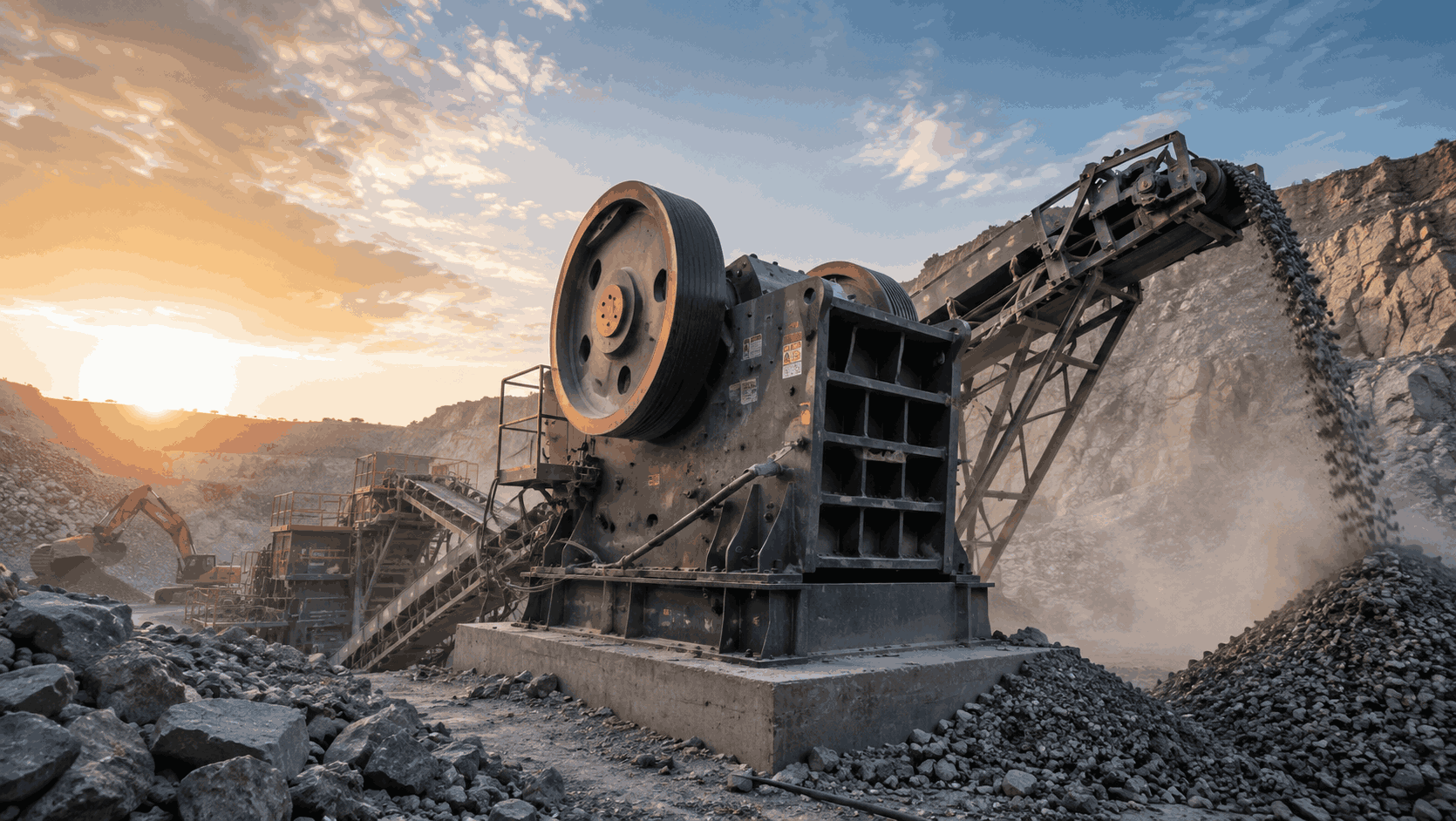
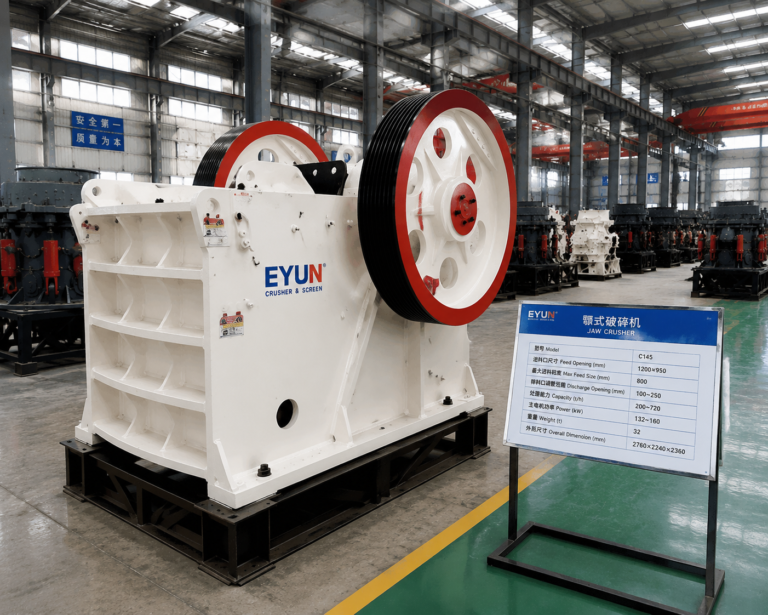
A jaw crusher compresses material between a fixed jaw plate and a moving jaw plate.
As the moving jaw swings back and forth, large rocks are crushed into smaller pieces until they are small enough to pass through the discharge opening.
Advantages
Handles very large feed sizes
Suitable for extremely hard rock
Simple mechanical structure
Low maintenance requirements
Reliable performance
Long service life
Low operating cost
Limitations
Particle shape is generally less uniform.
Reduction ratio is smaller than that of an impact crusher.
Usually requires secondary crushing.
Typical Applications
Jaw crushers are ideal for:
Granite
Basalt
River stone
Quartz
Iron ore
Copper ore
Gold ore
Limestone (primary crushing)
They are widely used in mining, quarrying, metallurgy, construction, and recycling industries.
3. Cone Crusher
Working Principle
A cone crusher compresses material between a rotating mantle and a stationary concave.
The crushing action is continuous, resulting in higher production capacity and lower energy consumption compared with intermittent crushing.
Advantages
Excellent for hard and abrasive materials
High production capacity
Low wear cost per ton
Consistent product size
Stable operation
High automation capability
Limitations
Higher initial investment
More complex structure
Requires well-controlled feed conditions
Typical Applications
Cone crushers perform exceptionally well with:
Granite
Basalt
River stone
Quartz
Gabbro
Andesite
Hard limestone
They are commonly installed after a jaw crusher in medium and large crushing plants.
4. Impact Crusher
Working Principle
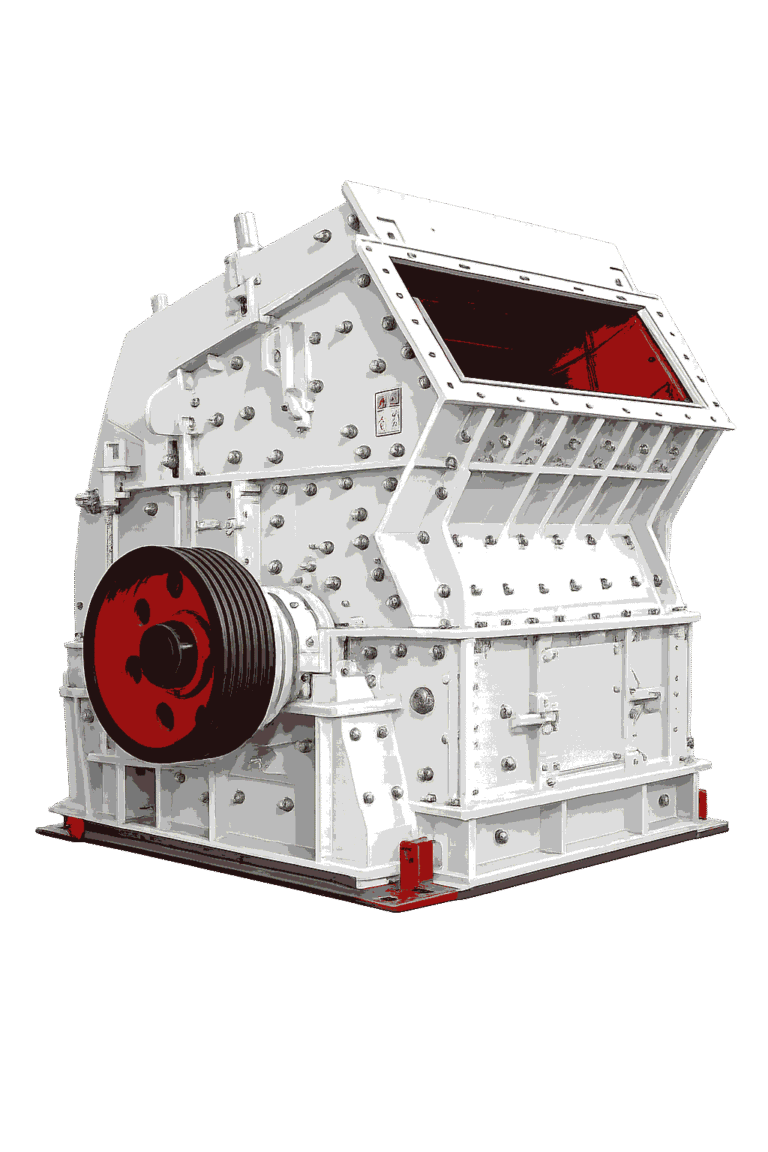
Unlike compression crushers, an impact crusher breaks material through high-speed impact.
A rapidly rotating rotor throws the material against impact plates, producing excellent particle shape.
Advantages
Excellent cubic particle shape
High reduction ratio
Lower initial investment
Simple installation
Suitable for recycled concrete and asphalt
Limitations
Wear parts experience faster wear when processing hard materials.
Higher maintenance cost for abrasive rock.
Not recommended for high-silica materials.
Typical Applications
Impact crushers are best suited for:
Limestone
Dolomite
Coal
Gypsum
Construction waste
Concrete recycling
They are widely used in aggregate production for highways, buildings, and infrastructure projects.
5. Comparison of the Three Crusher Types
Item
Jaw Crusher
Cone Crusher
Impact Crusher
Crushing Stage
Primary
Secondary / Tertiary
Secondary
Working Principle
Compression
Compression
Impact
Suitable Material
Hard Rock
Hard Rock
Soft to Medium-Hard Rock
Feed Size
Very Large
Medium
Medium
Product Shape
Good
Good
Excellent
Wear Resistance
Excellent
Excellent
Moderate
Operating Cost
Low
Medium
Medium to High
Initial Investment
Low
High
Medium
Maintenance Difficulty
Easy
Moderate
Moderate
6. Which Crusher Is Right for Your Material?
Granite
Recommended:
Jaw Crusher + Cone Crusher
Reason:
Granite has high compressive strength and strong abrasiveness. A cone crusher offers lower wear-part costs and longer service life than an impact crusher.
Basalt
Recommended:
Jaw Crusher + Cone Crusher
Reason:
Basalt is extremely hard and requires heavy-duty crushing equipment capable of continuous operation.
Limestone
Recommended:
Jaw Crusher + Impact Crusher
Reason:
Limestone is relatively soft, and an impact crusher produces excellent particle shape at a lower investment cost.
River Stone
Recommended:
Jaw Crusher + Cone Crusher
Reason:
River stone is highly abrasive. Cone crushers provide better wear resistance and lower long-term operating costs.
Construction Waste
Recommended:
Impact Crusher
Reason:
Impact crushers efficiently process concrete, bricks, and asphalt while producing well-shaped recycled aggregates.
7. Operating Cost Comparison
The purchase price of a crusher is only part of the total investment. Long-term operating costs often have a much greater impact on project profitability.
Major operating costs include:
Electricity consumption
Wear parts replacement
Lubrication
Routine maintenance
Labor
Unplanned downtime
Jaw Crusher
Operating Characteristics:
Low power consumption
Simple maintenance
Low spare parts cost
High reliability
Suitable for projects seeking stable long-term operation.
Cone Crusher
Operating Characteristics:
Higher initial investment
Excellent cost per ton for hard rock
Long liner service life
High production efficiency
For medium and large hard-rock projects, cone crushers often provide the lowest operating cost over the equipment’s lifetime.
Impact Crusher
Operating Characteristics:
Lower purchase price
Excellent particle shape
Higher wear-part consumption
More frequent maintenance when crushing abrasive materials
Impact crushers are economical for limestone and recycled concrete but become more expensive when processing granite or quartz.
8. Energy Consumption Comparison
Energy efficiency directly affects production costs.
Approximate comparison:
Jaw Crusher
Energy Consumption:
Low
Reason:
Intermittent compression with a simple mechanical structure.
Cone Crusher
Energy Consumption:
Medium
Reason:
Continuous crushing provides high productivity while maintaining good energy efficiency.
Impact Crusher
Energy Consumption:
Medium to High
Reason:
High-speed rotor operation requires more power, especially when processing larger feed sizes.
Choosing energy-efficient motors and optimizing the crushing process can significantly reduce electricity costs.
9. Wear Parts Cost Comparison
Wear parts represent one of the largest maintenance expenses in a crushing plant.
Crusher Type
Main Wear Parts
Typical Service Life*
Jaw Crusher
Jaw Plates
Long
Cone Crusher
Mantle & Concave
Long
Impact Crusher
Blow Bars & Impact Plates
Medium to Short
*Actual service life depends on material hardness, abrasiveness, operating conditions, and maintenance practices.
General guidance:
Hard rock → Cone Crusher has the lowest wear cost.
Soft rock → Impact Crusher remains economical.
Mixed materials → Evaluate both wear cost and desired product shape.
10. Investment Analysis
When selecting crushing equipment, consider the entire investment cycle rather than only the purchase price.
A lower initial cost does not always mean a lower lifetime operating cost.
Mistake 2
Ignoring material hardness.
Hard materials require equipment with high wear resistance.
Mistake 3
Overlooking finished product quality.
Different industries have different requirements for particle shape and grading.
Mistake 4
Selecting insufficient production capacity.
Equipment should meet both current production targets and future expansion needs.
Mistake 5
Ignoring after-sales service and spare parts support.
Reliable technical support is essential for minimizing downtime and maintaining production continuity.
13. Expert Recommendations
Based on years of industry experience, the following combinations are commonly recommended:
Granite / Basalt
Jaw Crusher
↓
Cone Crusher
Suitable for:
Mining
Railway ballast
Highway aggregates
Limestone
Jaw Crusher
↓
Impact Crusher
Suitable for:
Construction aggregates
Cement plants
Road base materials
River Stone
Jaw Crusher
↓
Cone Crusher
↓
VSI Sand Making Machine (Optional)
Suitable for:
Aggregate production
Manufactured sand
Construction Waste
Impact Crusher
↓
Screening
Suitable for:
Concrete recycling
Asphalt recycling
Urban demolition projects
Conclusion
Each crusher has unique strengths and is designed for specific applications.
Jaw Crushers are the preferred choice for primary crushing and handling large, hard materials.
Cone Crushers provide excellent performance for secondary crushing of hard and abrasive rocks while delivering low operating costs.
Impact Crushers are ideal for producing high-quality aggregates from soft to medium-hard materials and recycled concrete.
The most efficient crushing plant is rarely built around a single machine. Instead, it combines the strengths of different crushers to achieve the best balance of productivity, product quality, operating cost, and return on investment.
Before making a final decision, evaluate:
Material characteristics
Production capacity
Finished product requirements
Site conditions
Operating costs
Future expansion plans
A well-designed crushing solution will continue to generate value throughout the entire life of the project.
Contact Us
Need help selecting the right crusher for your project?
Our engineering team can recommend the most suitable solution based on: