Professional installation, commissioning, and operator training are essential for maximizing the performance of mining equipment. Learn how on-site engineering support improves safety, productivity, and long-term equipment reliability.
Introduction
Purchasing high-quality mining equipment is only the first step toward building a successful production plant.
The true success of a project depends on whether the equipment is installed correctly, commissioned professionally, and operated by well-trained personnel.
Many equipment failures are not caused by manufacturing defects but by improper installation, incorrect commissioning procedures, or insufficient operator training.
Professional engineering support helps customers shorten project startup time, reduce operational risks, improve production efficiency, and maximize equipment service life.
This article explains why installation support and operator training are critical to every mining project.
1. Why Professional Installation Matters
Mining equipment consists of numerous interconnected systems, including:
- Mechanical components
- Electrical systems
- Hydraulic systems
- Lubrication systems
- Automation systems
Even small installation errors may result in:
- Abnormal vibration
- Premature bearing failure
- Conveyor misalignment
- Hydraulic leakage
- Excessive wear
- Reduced production capacity
Professional installation ensures every component operates according to its original design specifications.
2. Pre-Installation Preparation
Before equipment arrives at the project site, several preparations should be completed.
Foundation Inspection
Engineers verify:
- Foundation dimensions
- Anchor bolt positions
- Concrete strength
- Surface levelness
Proper foundations are essential for equipment stability.
Site Planning
Before installation begins, confirm:
- Crane access
- Equipment storage area
- Electrical power availability
- Water supply
- Safety zones
Good planning reduces installation delays.
Equipment Inspection
Upon arrival, equipment should be inspected for:
- Shipping damage
- Missing components
- Packaging condition
- Identification labels
- Spare parts inventory
Any issues should be reported before installation begins.
3. Mechanical Installation
Mechanical installation normally follows the process flow of the production line.
Typical installation sequence:
- Hopper
- Vibrating Feeder
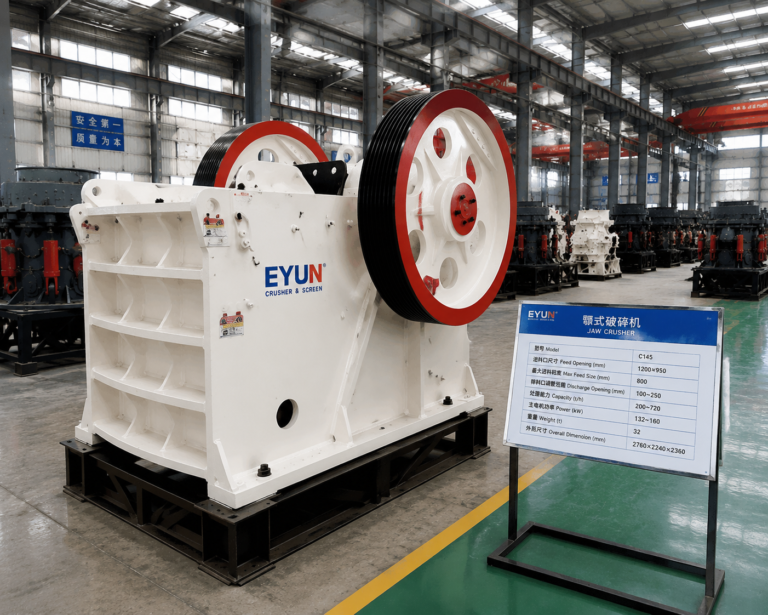
- Jaw Crusher
- Cone Crusher
- Vibrating Screen
- Belt Conveyors
- Dust Collection System
- Electrical Cabinets
Each machine is aligned carefully before final tightening.
Engineers check:
- Shaft alignment
- Bearing installation
- Coupling alignment
- Bolt torque
- Lubrication
Precision during installation significantly improves equipment reliability.
4. Electrical Installation
Electrical engineers connect:
- Main power supply
- Motors
- PLC control system
- Sensors
- Emergency stop circuits
- Control panels
After installation, electrical systems are tested for:
- Voltage
- Phase sequence
- Insulation resistance
- Grounding
- Motor rotation direction
All electrical work should comply with local regulations and safety standards.
5. Hydraulic and Lubrication Systems
Many modern cone crushers and other mining equipment rely on hydraulic systems.
Before startup, engineers inspect:
- Oil cleanliness
- Hydraulic pressure
- Pipe connections
- Filter condition
- Cooling system
Lubrication systems are also checked to ensure adequate oil flow to all critical components.
Proper lubrication during initial startup greatly reduces early component wear.
6. Equipment Alignment and Trial Assembly
Before commissioning, engineers verify:
- Conveyor alignment
- Pulley positions
- Screen inclination
- Crusher alignment
- Material transfer points
Equipment should be rotated manually whenever possible before powered operation.
This helps detect potential mechanical interference before startup.
7. Equipment Commissioning
After installation is completed, the production line enters the commissioning phase.
Commissioning is a systematic process that verifies every piece of equipment operates safely, efficiently, and according to design specifications before commercial production begins.
The commissioning process generally includes:
- Mechanical inspection
- Electrical system verification
- Lubrication confirmation
- Hydraulic system testing
- Safety device inspection
- PLC parameter verification
Only after all systems pass inspection should the equipment proceed to trial operation.
8. No-Load Testing
The first step of commissioning is running the equipment without material.
Engineers observe:
- Motor current
- Bearing temperature
- Hydraulic pressure
- Lubrication flow
- Equipment vibration
- Noise level
- Belt tracking
- Screen vibration amplitude
Any abnormal condition is corrected immediately before moving to the next stage.
No-load testing helps identify installation issues while minimizing equipment risk.
9. Load Testing
Once no-load testing is completed successfully, material is gradually introduced into the system.
Load testing evaluates:
- Actual production capacity
- Feed stability
- Crusher performance
- Finished product size
- Conveyor loading
- Screen efficiency
- Power consumption
- Dust generation
Engineers make adjustments as necessary to optimize the production process.
The objective is to ensure that the plant achieves its designed capacity while maintaining stable operation.
10. Operator Training Program
Well-trained operators are essential for maximizing equipment performance.
Our training program combines classroom instruction with practical field operation.
Equipment Operation
Operators learn:
- Correct startup procedures
- Shutdown sequence
- Emergency stop procedures
- Normal operating parameters
Understanding standard operating procedures helps reduce equipment damage caused by incorrect operation.
Preventive Maintenance
Training includes:
- Daily inspection routines
- Lubrication schedules
- Wear-part replacement
- Bearing inspection
- Cleaning procedures
- Record keeping
Preventive maintenance significantly reduces unplanned downtime.
Troubleshooting
Operators are trained to identify common issues, including:
- Abnormal vibration
- Bearing overheating
- Belt misalignment
- Hydraulic pressure alarms
- Screen blockage
- Uneven material feeding
Early diagnosis prevents small problems from developing into major failures.
11. Safety Management
Safety is a fundamental part of every installation and training project.
Engineers emphasize:
- Lockout/Tagout (LOTO)
- Personal Protective Equipment (PPE)
- Safe lifting procedures
- Confined space awareness
- Electrical safety
- Fire prevention
- Emergency evacuation
A safe workplace protects both personnel and equipment while ensuring continuous production.
12. Common Installation Problems and Solutions
Problem: Excessive Equipment Vibration
Possible Causes:
- Uneven foundation
- Loose anchor bolts
- Misalignment
Solution:
- Recheck foundation level
- Tighten all bolts
- Realign equipment
Problem: Belt Conveyor Deviation
Possible Causes:
- Improper pulley alignment
- Uneven material loading
- Damaged rollers
Solution:
- Adjust pulley positions
- Balance material flow
- Replace damaged rollers
Problem: Bearing Overheating
Possible Causes:
- Insufficient lubrication
- Contaminated grease
- Excessive preload
Solution:
- Re-lubricate according to specifications
- Replace contaminated lubricant
- Verify bearing installation
13. Customer Acceptance
After successful commissioning, the customer conducts a final inspection.
Typical acceptance criteria include:
- Production capacity
- Finished product specifications
- Equipment stability
- Safety performance
- Automation functions
- Noise and vibration levels
Once all contractual requirements are satisfied, the production line is officially handed over to the customer.
14. Long-Term Technical Support
Our commitment continues after project completion.
Technical support includes:
- Online engineering consultation
- Spare parts supply
- Remote troubleshooting
- Preventive maintenance guidance
- Equipment upgrades
- Process optimization
- Periodic technical reviews
Our objective is to establish long-term partnerships by helping customers maximize equipment performance throughout its service life.
15. International Project Case Study
Project Overview
A customer required a complete 300 TPH hard-rock crushing and screening plant.
Scope of work:
- Engineering design
- Equipment manufacturing
- Export packaging
- Overseas installation support
- Commissioning
- Operator training
Challenges
- Limited installation schedule
- High ambient temperatures
- Remote project location
- Local operators with limited experience
Engineering Solutions
Our engineering team:
- Optimized installation sequencing.
- Conducted on-site equipment alignment.
- Completed system commissioning.
- Trained operators in equipment operation and maintenance.
- Established preventive maintenance procedures.
Results
- Successful startup within the planned schedule.
- Stable production performance.
- High customer satisfaction.
- Reduced maintenance costs.
- Improved operator confidence.
This project demonstrates how professional engineering support contributes directly to project success.
Conclusion
A successful mining project requires more than reliable equipment.
Professional installation, systematic commissioning, comprehensive operator training, and responsive technical support are equally important for achieving long-term productivity and profitability.
By investing in proper engineering services, mining companies reduce startup risks, improve equipment reliability, enhance operator skills, and maximize return on investment.
Our goal is not only to deliver equipment but also to deliver confidence, efficiency, and long-term success.
Planning a new mining project or upgrading an existing production line?
Our engineering team offers:
✔ Equipment Selection
✔ Plant Layout Design
✔ Installation Supervision
✔ Commissioning Services
✔ Operator Training
✔ Preventive Maintenance Planning
✔ Technical Troubleshooting
✔ Spare Parts Support
✔ Process Optimization
✔ Long-Term After-Sales Service
Whether your project is located in Asia, Africa, the Middle East, Europe, or South America, we are ready to provide professional engineering support tailored to your requirements.
Contact us today and let our experienced engineers help your project achieve a safe startup, stable production, and sustainable long-term performance.